Table of Contents |
guest 2026-03-05 |
Instructor List
Course Schedule
2026 UW Course
Frontiers in Proteomics: Advanced Skyline Applications

Dear Skyline Users,
The Skyline Team and our invited instructors are pleased to announce this all-new advanced course:
- Who: Experienced Skyline users
- When: July 6 - 10, 2026
- Where: University of Washington, Seattle
- Cost: Academic: $500 | Industry: $1250
- Apply by: April 1, 2025
- Participants: 30
The all-new curriculum is designed for experienced Skyline users to deepen their expertise across advanced quantitative proteomics topics. Through a mix of lectures, hands-on exercises, and guided discussions, participants will explore real-world real-world system suitability and QC, advanced Skyline features, AI-driven workflows, and experiment design tailored to your own research goals.
Key topics include:
- System suitability and quality control strategies.
- Statistical methods for designing and analyzing advanced DIA experiments.
- The Skyline software ecosystem and integrating external tools effectively.
Applicants will be notified by April 10. Payment will secure your spot and includes course materials, refreshments, and a course dinner. Participants are responsible for their own travel, lodging and meals.
Registration includes course materials, refreshments, and a course dinner. Participants should organize their own travel, lodging and meals.
Don't miss this chance to explore the frontiers of proteomics and expand your skills using Skyline as a lens for discovery.
We hope you will join us.
Brendan MacLean,
Skyline Project Lead
When: July 6 - 10, 2026
Where: Foege Building, University of Washington, Seattle
(Meet at 9AM Monday between Foege South and North) (map)
Cost: Academic: $500 | Industry: $1250
Apply by: April 1, 2026
Participants: 30
Room & Board: Not included.
Related Links:
Course Schedule
Instructor List
Instructor List
The following instructors and speakers have agreed to contribute their expertise to the success of UW Course:
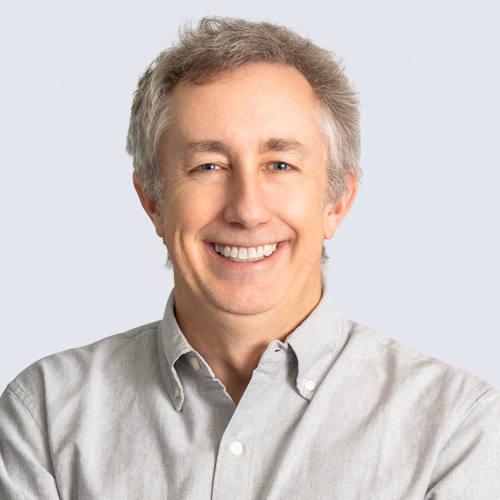 |
Michael J. MacCoss, Ph.D. Mike became interested in biomedical applications of mass spectrometry while working in Dr. Patrick Griffin’s protein mass spectrometry lab at Merck Research Laboratories. He obtained a Ph.D. with Professor Dwight Matthews and pursued a postdoc with Professor John R. Yates III. In 2004 he started the MacCoss lab at the University of Washington and it became obvious that while mass spectrometry data could be collected quickly and robustly, the lack of computational tools for the visualization and analysis of these data was a stumbling block. In 2009 he recruited Brendan MacLean with the goal of developing professional quality software tools for quantitative proteomics. Mike has worked closely with the Skyline development team and our outstanding group of laboratory scientists and collaborators to ensure that our software uses analytical approaches that have been thoroughly vetted by the mass spectrometry community. |
|
 |
Brendan MacLean Brendan worked at Microsoft for 8 years in the 1990s where he was a lead developer and development manager for the Visual C++/Developer Studio Project. Since leaving Microsoft, Brendan has been the Vice President of Engineering for Westside Corporation, Director of Engineering for BEA Systems, Inc., Sr. Software Engineer at the Fred Hutchinson Cancer Research Center, and a founding partner of LakKey Software. In this last position he was one of the key programmers responsible for the Computational Proteomics Analysis System (CPAS), made significant contributions to the development of X!Tandem and the Trans Proteomic Pipeline, and created the LabKey Enterprise Pipeline. Since August, 2008 he has worked as a Sr. Software Engineer within the MacCoss lab and been responsible for all aspects of design, development and support in creating the Skyline Targeted Proteomics Environment and its growing worldwide user community. |
|
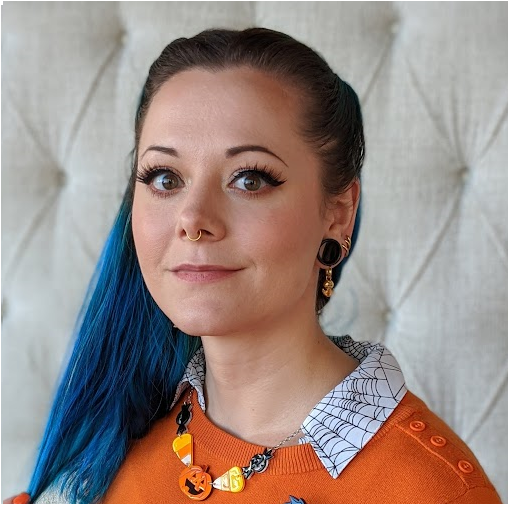 |
Kat Forrest Kat Forrest is a research scientist and graduate student in the Hoofnagle Laboratory at the University of Washington. Prior to joining UW, Kat worked as an analytical chemist at Boston-based synthetic biology company Ginkgo Bioworks, where she helped to develop quantitative methods to support bioengineering projects. In her current role in the Hoofnagle Lab, Kat regularly utilizes Skyline in her efforts to develop mass spectrometry assays for small molecules and proteins. |
|
 |
Chris Hsu Chris completed his B.S. in Biochemistry in 2018 at the UW. Currently, he is a Genome Sciences Ph.D. candidate at the UW in Dr. Michael MacCoss’s lab. His research focuses on developing new methods to compare quantitative analysis of instruments and applying these new methods to answer questions about spatial proteomics. He uses Skyline for external tool development and extracting ion count information from peptides for his analysis. |
|
 |
Lindsay K. Pino, Ph.D. Lindsay is the co-founder and chief technology officer at Talus Bioscience. With over a decade’s experience in analytical chemistry and computational biology, she works on developing techniques for quantitative proteomics. In particular, at Talus her focus is on the challenges associated with scaling-up quantitative proteomics experiments. She is directly involved in a large variety of research projects spanning cancer, molecular mechanisms of aging, epigenetics, and spatiotemporal proteomics, all built on her foundational skills in quantitative mass spectrometry proteomics. |
|
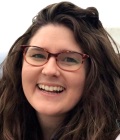 |
Deanna Plubell, Ph.D. Deanna is a recent PhD in the MacCoss lab at the University of Washington. A portion of her research has been the use of data-independent acquisition to aid in peptide selection for targeted assay development. Her other research interests include the use of mass spectrometry techniques for detecting proteolytic cleavage activity and small endogenous polypeptides in neurodegenerative disease. Prior to joining the MacCoss lab, Deanna worked at Oregon Health & Science University where she used both discovery and targeted proteomics methods to investigate changes to adipose tissue and lipoprotein proteomes in cardiovascular and metabolic diseases. |
|
 |
Mike Riffle Mike Riffle has many years of experience in bioinformatics, data science, and statistics; and has worked with several leading academic proteomics laboratories in the US. He is a proponent of open and reproducible science, and has produced several open source tools for proteomics data visualization, including Proxl (protein cross-linking) and, more recently, Limelight (generalized proteomics data visualization and sharing). Michael has a Bachelors in Molecular and Cellular Biology from the University of Washington and his Masters in Computer Science from the University of Illinois Urbana-Champaign. |
|
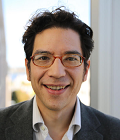 |
Brian Searle, Ph.D. Brian is an Assistant Professor at the Ohio State University Medical Center in the Department of Biomedical Informatics and a member of the Pelotonia Institute for Immuno-Oncology (PIIO). Brian received his chemistry BA at Reed College in 2001. In 2004, he co-founded Proteome Software with Mark Turner and Dr. Ashley McCormack to produce and distribute cutting-edge data analysis software for proteomicists. In 2014, he returned to academia to earn his PhD with Dr. Michael MacCoss at University of Washington, where he developed methods to detect and quantify proteins and phosphosites using mass spectrometry. His lab at PIIO spans the intersection of proteomics, mass spectrometry, bioinformatics, and technology development to study human genetic variation in the backdrop of cancer. |
|
 |
Vagisha Sharma Vagisha got involved with proteomics at UC San Diego where she worked with Prof. Vineet Bafna. During that time she built her first tools for visualizing Mass Spectrometry data while working at ActivX Biosciences. Since moving to Seattle Vagisha has worked on Mass Spectrometry pipelines for the Aebersold group at the Institute for Systems Biology, and developed a data management system while at the University of Washington Proteomics Resource and the Yeast Resource Center. She joined the Skyline team in October 2011 where she has been the lead developer for the Panorama Targeted Proteomics Knowledge Base. |
|
 |
Nicholas Shulman Nick worked from 1995-2000 at Microsoft on the Microsoft Access team, leaving to join Westside Corporation with Brendan to create browser-based database design tools. After Westside was acquired by BEA Systems, Nick created a new graphical JSP designer for Weblogic Workshop, an award winning Integrated Development Environment for enterprise Java applications. At LabKey Corporation, Nick created the flow cytometry module and the graphical query designer. Since March, 2009 he has worked in the Maccoss lab on Skyline and Topograph, a quantitative analysis tool for protein turnover experiments. |
Course Schedule
2026 Frontiers in Proteomics: Advanced Skyline Applications
Monday:
- Meet at Foege S. (between Foege South and North) at 9am
- Welcome and lecture: What do we mean when we say quantitative proteomics?
- DIA Review and Primer
- Skyline for Chromatogram based proteomics data review and analysis
- Hands:On: Practical DIA Acquisition and Basic Data Analysis with Skyline
- Tutorial: DIA analysis with libraries in Skyline
Tuesday:
- Practical DIA measurements
- How do you know your data is ok? Intro to system suitability, quantitative QC, and process controls.
- What is wrong with this data?
- Viewing the output of other DIA tools in Skyline
Wednesday:
- Experiment design, minimizing confounders, block design and randomization. When experiments go wrong.
- Case Studies: How would you design this experiment?
- Octopus Block Randomizer and tutorial
- Using AI generated Peptide Property Libraries in the analysis of mass spectrometry data
- Tutorial: Generating fine-tuned libraries
Thursday:
- Plasma Proteomics - Review. Challenges and Progress in the field.
- Case Study in CSF proteomics
- Analysis of multibatch complex experimental data.
- Peak Imputation
- Tutorial: Advanced workflows involving Skyline
Friday:
- Low input, spatial, and single cell proteomics
- Highly Multiplexed Targeted Proteomics
- DIA > PRM workflow tutorials
- Quantitative assay validation
- Conclusion: The future of targeted proteomics
The course also includes popular morning “Sky-Jam” sessions led by Brendan MacLean with hands-on Skyline processing.
Note: As instructors update their content for this course, this agenda may change.