The following instructors and speakers have agreed to contribute their expertise to the success of 2018 Case Studies in Quantitative Proteomics Course at ASMS:
 |
Michael J. MacCoss, Ph.D. Mike became interested in biomedical applications of mass spectrometry while working in Dr. Patrick Griffin’s protein mass spectrometry lab at Merck Research Laboratories. He obtained a Ph.D. with Professor Dwight Matthews and pursued a postdoc with Professor John R. Yates III. In 2004 he started the MacCoss lab at the University of Washington and it became obvious that while mass spectrometry data could be collected quickly and robustly, the lack of computational tools for the visualization and analysis of these data was a stumbling block. In 2009 he recruited Brendan MacLean with the goal of developing professional quality software tools for quantitative proteomics. Mike has worked closely with the Skyline development team and our outstanding group of laboratory scientists and collaborators to ensure that our software uses analytical approaches that have been thoroughly vetted by the mass spectrometry community. |
|
 |
Brendan MacLean Brendan worked at Microsoft for 8 years in the 1990s where he was a lead developer and development manager for the Visual C++/Developer Studio Project. Since leaving Microsoft, Brendan has been the Vice President of Engineering for Westside Corporation, Director of Engineering for BEA Systems, Inc., Sr. Software Engineer at the Fred Hutchinson Cancer Research Center, and a founding partner of LakKey Software. In this last position he was one of the key programmers responsible for the Computational Proteomics Analysis System (CPAS), made significant contributions to the development of X!Tandem and the Trans Proteomic Pipeline, and created the LabKey Enterprise Pipeline. Since August, 2008 he has worked as a Sr. Software Engineer within the MacCoss lab and been responsible for all aspects of design, development and support in creating the Skyline Targeted Proteomics Environment and its growing worldwide user community. |
|
 |
Meena Choi Ph.D. Meena is a post-doctoral associate in the lab of Olga Vitek at Northeastern University. She holds a B.S. in Biology from the Korea Advanced Institute for Science and Technology, and a PhD in Statistics from Purdue University. Meena’s work focuses on statistical methods for quantitative proteomics. She is the lead developer and maintainer of MSstats. | |
 |
Jacob D. Jaffe, Ph.D. Jake is the Assistant Director of the Proteomics Platform at the Broad Institute. He obtained his B.A. in Biochemistry from the University of Pennsylvania and his Ph.D. from Harvard University where he studied with George Church and Howard Berg. Dr. Jaffe has pioneered diverse problems in modern proteomics including large-scale mapping of proteomic data onto genomes, thus allowing their de novo annotation from proteomic evidence, pattern recognition for quantitative proteomics, determination and quantification of epigenetic marks on histone proteins, and high-throughput targeted phosphoproteomics. |
|
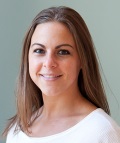 |
Lindsay K. Pino is a Ph.D. candidate at the University of Washington’s Department of Genome Sciences in the MacCoss lab. Her research interests include the development of large-scale proteomics assays using data independent acquisition-MS to investigate complex mixtures and applying computational techniques to mine the resulting high-dimensional data. Prior to joining the MacCoss lab, she worked as a research associate at the Broad Institute of MIT and Harvard in Dr. Steve Carr’s Proteomics Platform, where she worked under Dr. Susan Abbatiello to improve the speed and selectivity of targeted proteomics assays using high-field asymmetric waveform ion mobility spectrometry (FAIMS). | |
 |
Olga Vitek Olga is a Sy and Laurie Sternberg Associate Professor in the College of Science and the College of Computer and Information Science at Northeastern University. Olga holds a PhD in Statistics from Purdue University. Her group develops statistical methods and algorithms for quantitative proteomics. The methods optimize the experimental design, and ensure accurate and objective interpretation of the resulting large and complex datasets. The tools developed by her group include MSstats, an open-source software for statistical analysis of quantitative shotgun, targeted and data-independent proteomic experiments. |